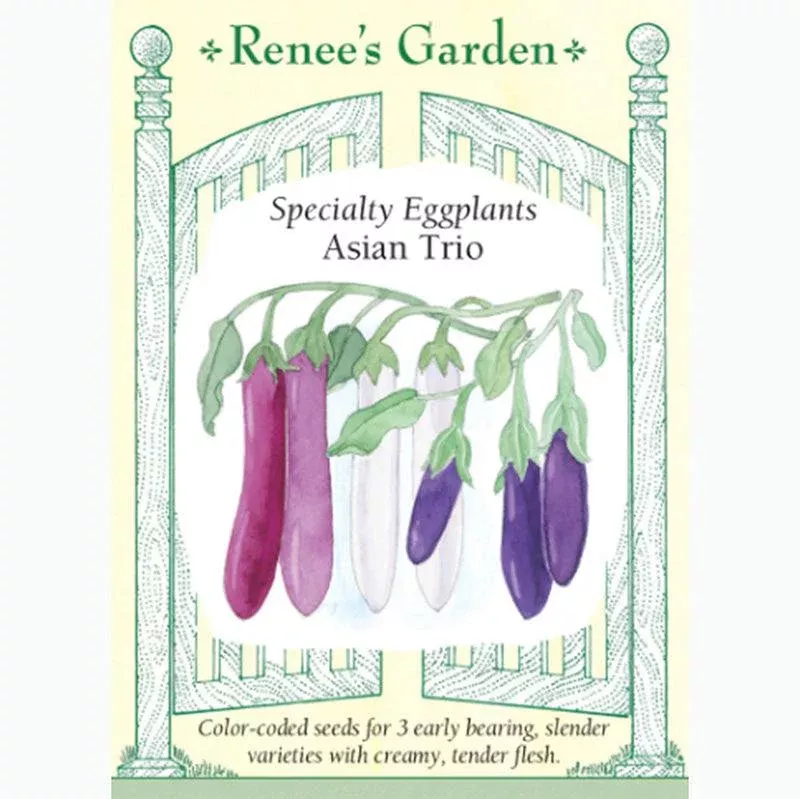
The Specialty Eggplants Asian Trio offers a diverse blend of eggplant cultivars, originating from various regions across Asia and belonging to the Solanum melongena species. Renowned for their unique shapes, vibrant colors, and distinct flavors, these eggplants enrich culinary experiences with their diversity. This trio showcases an aesthetic wonder, featuring three distinct eggplant varieties. The cultivars encompass the slender, elongated Japanese eggplant, the small and round Thai eggplant, and the long and slender Chinese eggplant. Each variant boasts a different hue and shape, ranging from dark purple and green to creamy white, offering a visual delight in gardens and on plates.
Variety Details
Plant type: Tender Annual
Growth habit: Bush
Crop category: Eggplant
Kitchen profile: The Specialty Eggplants Asian Trio offers a diverse blend of eggplant cultivars, originating from various regions across Asia and belonging to the Solanum melongena species.
Recorded feature: Open-Pollinated
Product format: Seed packet
Sowing & Growing
Seed starting: Start seeds indoors approximately 6-8 weeks before the last frost date, using a well-draining seed-starting mix.
Light: Full Sun
Planting season: Summer
Starting location: Start Indoors & Transplant
Recorded soil pH: 5.6 – 6.0 or 6.1 – 6.5 or 6.6 – 7.0
Start ‘Asian Trio’ Specialty Eggplant in warm seed-starting conditions with enough time to establish seedlings before outdoor temperatures are suitable. Provide strong light after emergence and transplant after frost risk has passed. Preserve the recorded spacing and check soil moisture at root depth, adjusting to weather rather than a fixed calendar. Harvest fruit at the size, color, and firmness described for the variety, using clean cuts to avoid damaging stems.
Before sowing ‘Asian Trio’ Specialty Eggplant, review the packet alongside the current product details and note any range in temperature, germination, or maturity. Ranges reflect biological and seasonal variation rather than a fixed promise. Label each planting with its date and location, then compare emergence, growth, and harvest with local weather. This record is useful for succession plantings and for deciding whether the crop fits better into an earlier or later seasonal window.