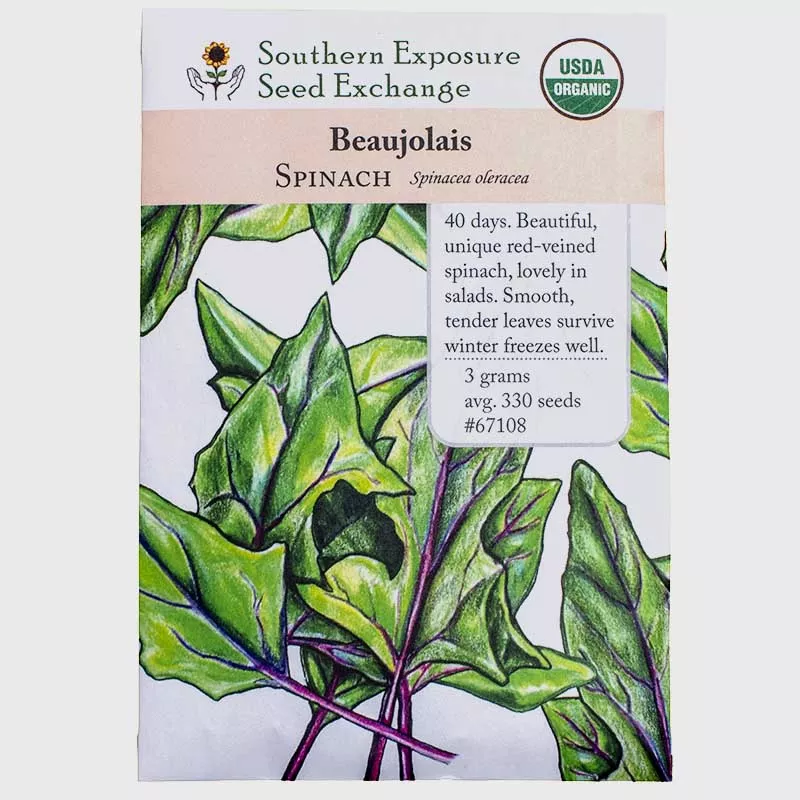
Organic Beaujolais spinach seeds yield tender, flavorful leaves ideal for salads, sautés, and flavorful meals. This cool-season spinach variety performs well in early spring and fall, offering dependable growth even in fluctuating temperatures. Beaujolais spinach ( Spinacia oleracea ) thrives in full sun to partial shade and prefers fertile, well-draining soil enriched with organic matter to support vigorous leaf production. Gardeners enjoy its consistent texture, vibrant color, and adaptability for both baby-leaf and full-size harvests. Regular picking encourages regrowth, allowing for extended harvest windows that suit home gardeners and small-scale growers alike.
Variety Details
Botanical name:Spinacia oleracea
Plant type: Annual
Growth habit: Low Growing
Crop category: Spinach
Product format: Seed packet
Sowing & Growing
Soil Temperature: 45-70°F
Planting Depth: 1/2″
Germination: 7-14 Days
Height at Maturity: 8″-10″
Days to Maturity: 35-50 Days
Sun/Shade: Full Sun to Partial Shade
Spacing After Thinning: 4″-6″
Use Beaujolais Spinach as a cool-season leafy crop, sowing into a prepared bed when local temperatures fit the recorded range. Keep the shallow seed zone from drying during establishment, then thin seedlings so leaves have room to expand. Harvest individual outer leaves or whole plants at the preferred stage. As days warm, monitor development and soil moisture closely. A dated label helps compare actual emergence and harvest timing with the figures supplied.
Because of its compact form, this spinach fits well into raised beds, containers, and tightly spaced row plantings, making it an efficient and versatile choice for any edible garden layout.
Before sowing Beaujolais Spinach, review the packet alongside the current product details and note any range in temperature, germination, or maturity. Ranges reflect biological and seasonal variation rather than a fixed promise. Label each planting with its date and location, then compare emergence, growth, and harvest with local weather. This record is useful for succession plantings and for deciding whether the crop fits better into an earlier or later seasonal window.
Explore related options in our growing a fall garden.