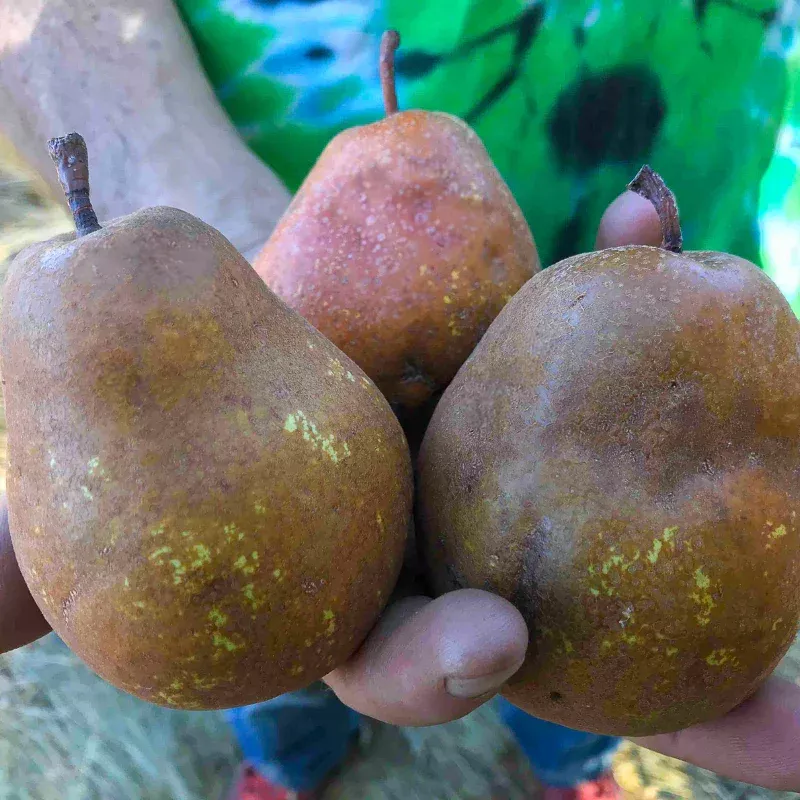
Big Brown Pear Tree is a rare Sierra foothill discovery with a rugged exterior and unexpectedly refined eating quality. Its large fruit develops substantial brown skin that gives it an unmistakably old-world appearance, while the flesh offers the sweetness, juice, and texture that brought this unidentified survivor to the attention of the Felix Gillet Institute. The original cultivar name has been lost, turning every propagated tree into part of an ongoing preservation story. Rather than offering the visual uniformity of a supermarket pear, Big Brown carries the character of an antique farm orchard and the resilience of a tree selected by time. It is an appealing choice for gardeners who enjoy unusual fruit, regional history, and the possibility of helping conserve genetics that might otherwise disappear. Spring bloom and a substantial harvest add beauty and productivity to that larger purpose.
Big Brown is suited to USDA zones 5–9 and has a confirmed 700–900 chill-hour requirement. This standard tree grows on OHxF333 rootstock and generally ripens in October. Plant in full sun with well-drained soil, provide deep irrigation during establishment, and prune to develop a strong framework capable of carrying large fruit.
Big Brown requires another compatible European pear for pollination. Confirmed partners include Bosc, Comice, and Bartlett.
Big Brown Pear Tree Details
Fruit: Large heirloom pears with rugged brown skin
Flavor and texture: Sweet, juicy, and richly pear-like
Best uses: Fresh eating, cooking, preservation, and heritage tasting
Harvest: October, with timing varying by region and season
USDA zones: 5–9
Chill hours: 700–900 hours
Tree size: Standard on OHxF333 rootstock
Rootstock: OHxF333
Pollination: Requires another compatible European pear
Recommended pollinizers: Bosc, Comice, or Bartlett
Special care: Build strong scaffolds and thin clusters to support the large fruit
Something Special: The unidentified mother tree was rediscovered in Nevada County by the Felix Gillet Institute.