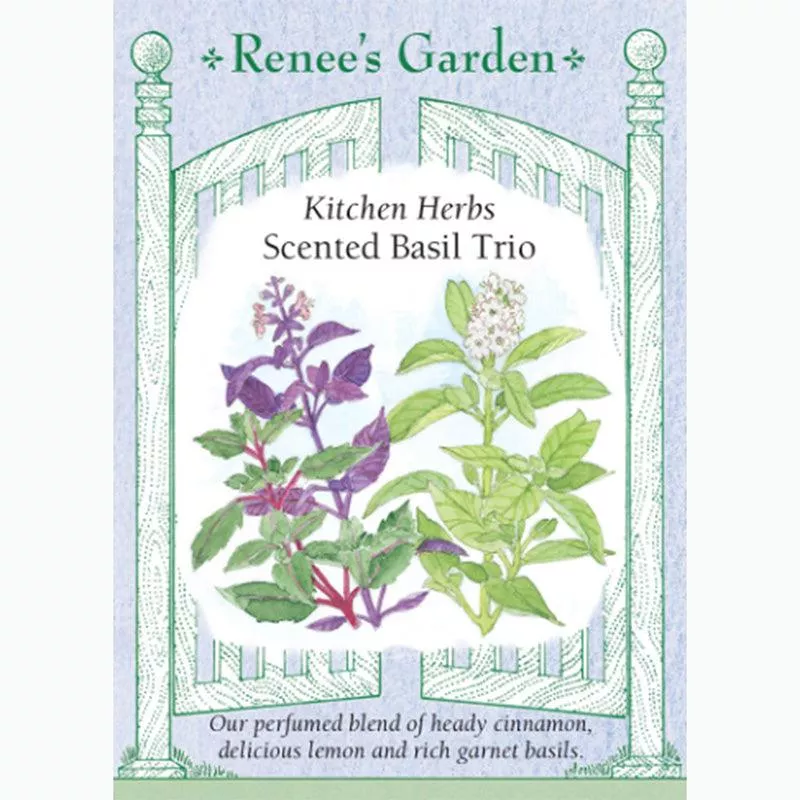
The Garden Kitchen Herbs Scented Basil Trio offers an aromatic blend of basil cultivars originating from various regions, each presenting unique fragrances, appearances, and culinary uses. Basil, scientifically known as Ocimum basilicum, holds a rich historical significance and is celebrated for its diverse flavors. This trio encompasses three distinct basil variants: Genovese, Lemon, and Purple Ruffles. Genovese basil, originating from Italy, boasts large, aromatic leaves with a sweet, robust flavor, suited to pesto and Italian cuisine. Lemon basil, with its citrusy aroma and mild lemon taste, adds a refreshing twist to salads and seafood dishes.
Variety Details
Plant type: Tender Annual
Growth habit: Herbaceous
Crop category: Herb
Kitchen profile: The Garden Kitchen Herbs Scented Basil Trio offers an aromatic blend of basil cultivars originating from various regions, each presenting unique fragrances, appearances, and culinary uses.
Recorded feature: Container Compatible
Product format: Seed packet
Sowing & Growing
Seed starting: Start seeds indoors about 6-8 weeks before the last frost date, using well-draining soil.
Light: Full Sun
Planting season: Spring
Starting location: Direct Sow or Start Indoors & Transplant
Recorded soil pH: 5.6 – 6.0 or 6.1 – 6.5
Match ‘Scented Basil Trio’ Kitchen Herb to the light, soil, and temperature information recorded for the species. Some herbs are direct sown, while others benefit from a protected start or species-specific pretreatment, so retain the packet for reference. Keep seed media from drying during establishment without leaving it saturated. Once plants are growing, harvest modestly so foliage remains for continued development. Assign perennial herbs a long-term location, and consider containers for species with a spreading habit.
Before sowing ‘Scented Basil Trio’ Kitchen Herb, review the packet alongside the current product details and note any range in temperature, germination, or maturity. Ranges reflect biological and seasonal variation rather than a fixed promise. Label each planting with its date and location, then compare emergence, growth, and harvest with local weather. This record is useful for succession plantings and for deciding whether the crop fits better into an earlier or later seasonal window.