Tender Baby Leaf Chard is presented as a specific seed variety for gardeners comparing choices by growth habit, seasonal timing, mature size, and intended use. The description below separates identifying traits from sowing and growing information, keeps numerical ranges visible when they are present in the product record, and avoids turning general crop guidance into a fixed promise. Use these details with the packet and local conditions when planning the planting, then record actual emergence, harvest, or bloom timing for future sowings successfully.
Variety Details
Plant type: Biennial
Growth habit: Herbaceous
Crop category: Beet
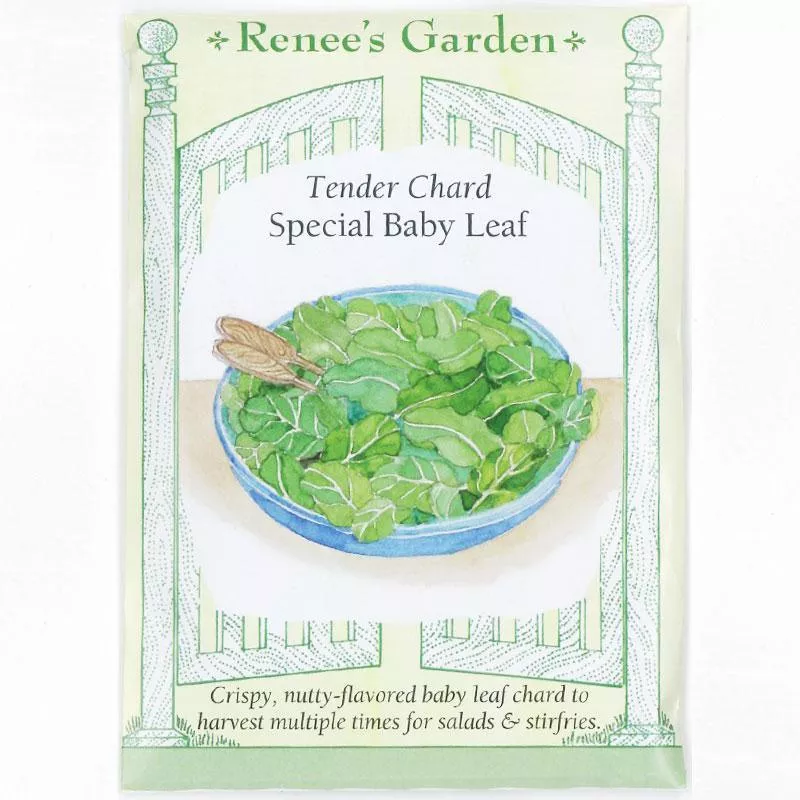
Kitchen profile: Renee’s Garden crispy, nutty-flavored Baby Leaf chard is the fastest growing and best tasting, whether you use it in salads or steam, stirfry or braise its handsome green leaves.
Recorded feature: Container Compatible
Product format: Seed packet
Sowing & Growing
Light: Full Sun
Planting season: Fall or Spring
Starting location: Direct Sow
Recorded soil pH: 6.1 – 6.5 or 6.6 – 7.0
Direct sow Tender Baby Leaf Chard into a prepared, loose seedbed and keep the seed zone moist during establishment. Seed clusters can produce more than one seedling, so thin carefully when plants are large enough to handle. Use young leaves selectively if desired while preserving foliage for root development. Check root shoulders as maturity approaches and harvest at the preferred size. Seasonal conditions and spacing can influence both root size and harvest timing.
Before sowing Tender Baby Leaf Chard, review the packet alongside the current product details and note any range in temperature, germination, or maturity. Ranges reflect biological and seasonal variation rather than a fixed promise. Label each planting with its date and location, then compare emergence, growth, and harvest with local weather. This record is useful for succession plantings and for deciding whether the crop fits better into an earlier or later seasonal window.