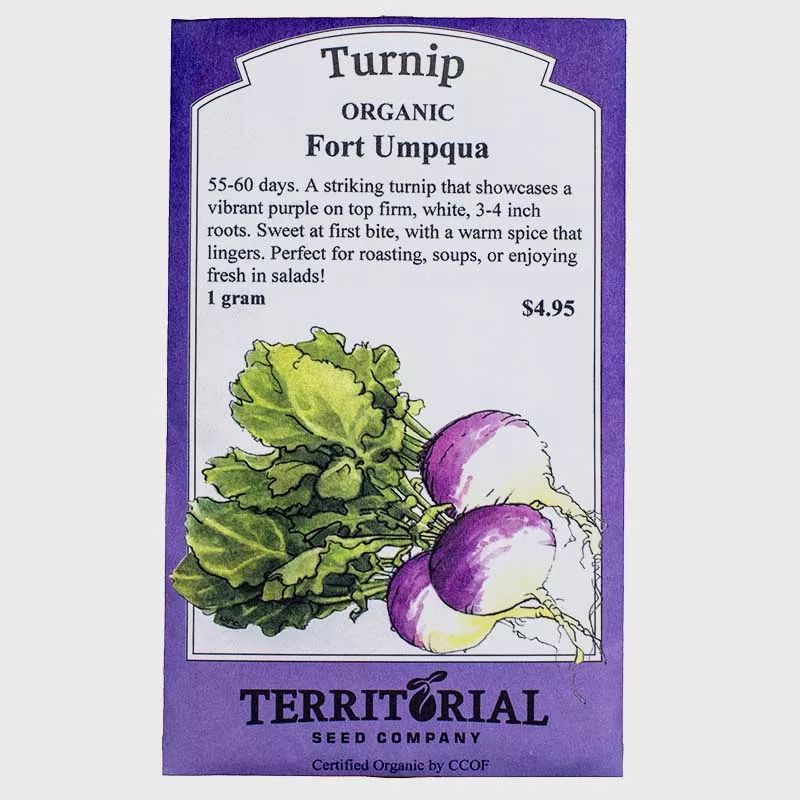
Organic Turnip Fort Umpqua seeds produce fast-growing, versatile turnips known for their smooth roots, mild flavor, and tender greens. This dependable variety, Fort Umpqua turnip ( Brassica rapa subsp. rapa ), thrives in cool weather, making it ideal for spring and fall plantings where quick maturity and consistent performance are essential. The roots develop a crisp texture and sweet flavor when grown in fertile, well-draining soil with even moisture, while the leafy tops can be harvested young for nutritious greens. Fort Umpqua turnips adapt well to raised beds, traditional garden rows, and small spaces, giving gardeners a multipurpose crop with a generous harvest window.
Variety Details
Botanical name:Brassica rapa
Plant type: Annual
Growth habit: Root Crop
Crop category: Turnip
Kitchen profile: Organic Turnip Fort Umpqua seeds produce fast-growing, versatile turnips known for their smooth roots, mild flavor, and tender greens.
Product format: Seed packet
Sowing & Growing
Soil Temperature: 50-75°F
Planting Depth: 1/4″
Germination: 5-17 Days
Height at Maturity: 12″-18″
Days to Maturity: 45-60 Days
Sun/Shade: Full Sun
Spacing After Thinning: 3″-6″
Direct sow Turnip Fort Umpqua into a prepared bed during the local cool-season window. Keep the seed zone from drying during establishment and thin seedlings to the recorded spacing. Harvest leaves selectively when the crop is grown for greens, or allow roots room to size when that is the intended use. Check root shoulders as the maturity range approaches and harvest at the size and texture preferred for fresh use, cooking, or storage.
Before sowing Turnip Fort Umpqua, review the packet alongside the current product details and note any range in temperature, germination, or maturity. Ranges reflect biological and seasonal variation rather than a fixed promise. Label each planting with its date and location, then compare emergence, growth, and harvest with local weather. This record is useful for succession plantings and for deciding whether the crop fits better into an earlier or later seasonal window.
Explore related options in our Vegetable & Flower Seeds collection.