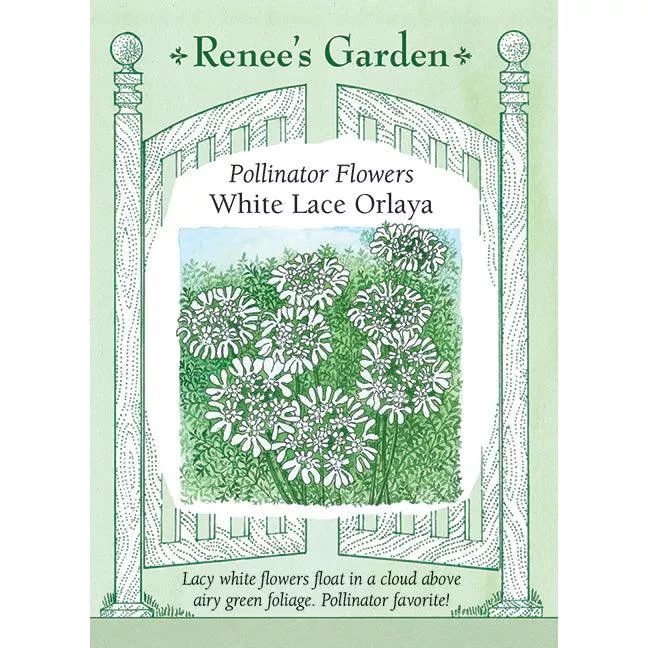
White Lace Orlaya Grandiflora is an elegant annual cherished for its delicate, lacy white blooms that resemble intricate doilies. These showy flowers bloom in generous clusters atop sturdy stems, creating a refined and airy display that adds sophistication to garden beds, borders, and floral arrangements. White Lace Orlaya grows to a height of 2–3 feet, making it suited for adding vertical interest and texture to your garden design. This graceful variety thrives in full sun and well-draining soil, requiring minimal care once established.
Variety Details
Crop category: Flower seed
Flower character: White Lace Orlaya Grandiflora is an elegant annual cherished for its delicate, lacy white blooms that resemble intricate doilies.
Recorded feature: Open-Pollinated
Product format: Seed packet
Seed type: Open-pollinated
Sowing & Growing
Light: Full Sun
Recorded USDA zones: 5, 6, 7, 8, 9
Packet directions: Use packet-specific measurements when exact sowing figures are absent from the current record
Prepare a weed-reduced seedbed for ‘White Lace Orlaya’ Pollinator Flower and use the recorded planting season, depth, and light requirements. Press shallow-sown seed into good soil contact and keep the seed zone from drying during establishment. Thin or transplant only when the growth habit and spacing call for it. Leave enough room for mature width and air movement. Bloom timing and final height can shift with sowing date, climate, soil, moisture, and competition, so use listed figures as planning ranges.
Its long-lasting blooms attract beneficial pollinators such as bees and butterflies, while its fine texture suits both fresh and dried arrangements.
With a prolonged blooming period from late spring to early summer, White Lace Orlaya ensures your garden remains vibrant and ornamental.
Place ‘White Lace Orlaya’ Pollinator Flower where its recorded height and growth habit fit the surrounding planting. Shorter companions can be positioned toward bed edges, while taller stems need room where they will not shade small seedlings too early. If cutting flowers, harvest with clean tools at the stage appropriate to the bloom form. If leaving flowers in place, observe how bloom sequence changes through the season and record which sowing date performed best at the site.