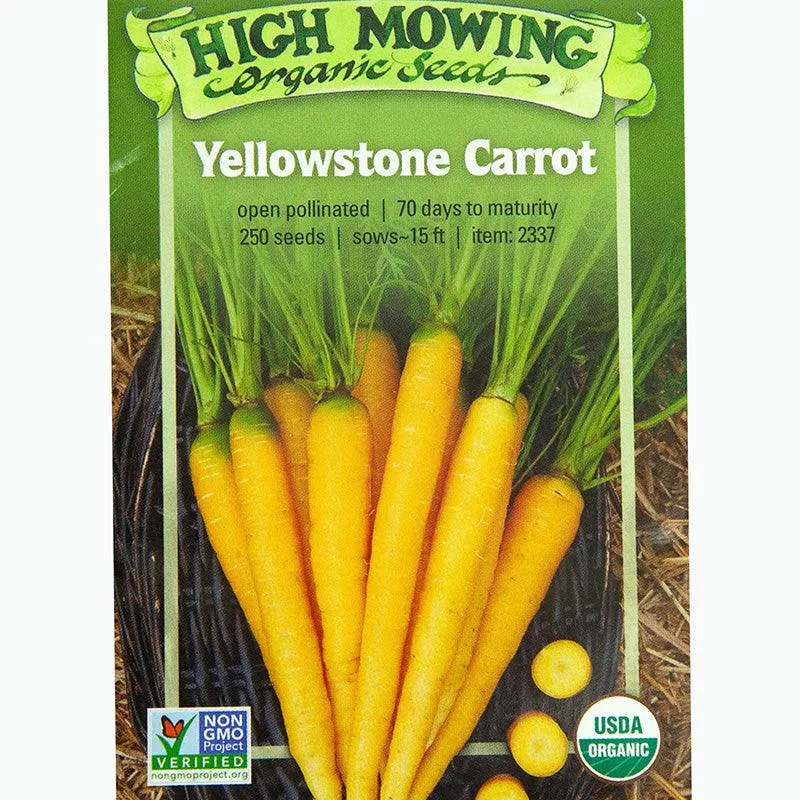
Organic Yellowstone is a yellow carrot with long, tapered roots and a mild, sweet flavor. Its sunny color adds contrast to fresh salads, roasted vegetables, soups, and mixed-root dishes. Direct-sow in loose, deeply worked soil in full sun. Keep the seedbed evenly moist until seedlings emerge, then thin to 2–3 inches apart. Avoid fresh manure and remove stones or compacted clods that can cause roots to fork. A light mulch can help moderate soil moisture as plants mature. Yellowstone is listed by the breeder at approximately 70 days to maturity.
Variety Details
Plant type: Biennial
Growth habit: Herbaceous
Crop category: Carrot
Kitchen profile: Organic Yellowstone is a yellow carrot with long, tapered roots and a mild, sweet flavor.
Recorded feature: Open-Pollinated
Product format: Seed packet
Sowing & Growing
Soil temperature: 45–85°F
Planting depth: 1/4–1/2 inch
Sun: Full sun
Spacing after thinning: 2–3 inches
Days to maturity: Approximately 70
Sow Yellowstone Carrot directly into a loose, stone-free seedbed and keep the shallow seed zone evenly moist through the potentially extended germination period. Thin seedlings to the recorded spacing so roots have room to size and straighten. Avoid disturbing established roots by transplanting. As maturity approaches, inspect root shoulders and harvest at the diameter and texture you prefer. Mark the sowing date because soil temperature and seasonal conditions can move actual harvest timing.
Harvest when roots reach the preferred size and color.
Loosen the soil before pulling, remove the tops, and store unwashed roots in cool, humid conditions.
Before sowing Yellowstone Carrot, review the packet alongside the current product details and note any range in temperature, germination, or maturity. Ranges reflect biological and seasonal variation rather than a fixed promise. Label each planting with its date and location, then compare emergence, growth, and harvest with local weather. This record is useful for succession plantings and for deciding whether the crop fits better into an earlier or later seasonal window.
Explore related options in our Carrot Seeds collection.