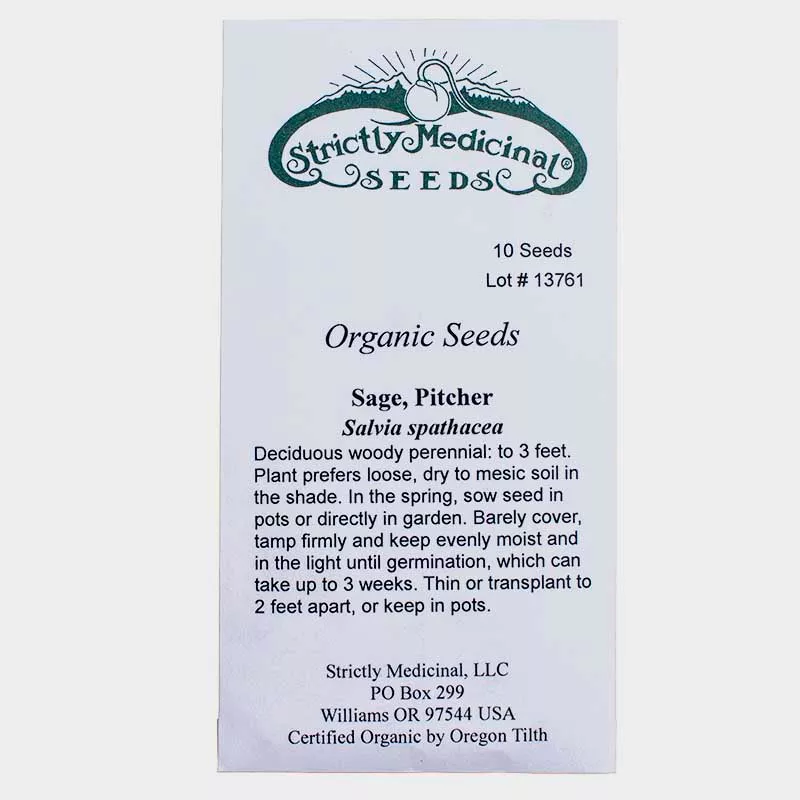
This hardy perennial, pitcher sage ( Salvia spathacea ), thrives in sunny, well-draining locations and brings bold vertical structure to herb gardens, pollinator plantings, and mixed perennial beds. With its aromatic foliage and showy blooms, pitcher sage adds both beauty and ecological value, supporting beneficial insects throughout the growing season. Its drought tolerance makes it an excellent choice for water-wise landscapes, and once established, the plants require minimal upkeep. Gardeners enjoy how pitcher sage complements other perennial herbs by adding height, movement, and seasonal color to borders.
Variety Details
Botanical name:Salvia spathacea
Plant type: Perennial
Growth habit: Herbaceous
Crop category: Herb
Recorded feature: Fragrant
Product format: Seed packet
Sowing & Growing
Soil Temperature: 65-75°F
Planting Depth: 1/4″
Germination: 10-21 Days
Height at Maturity: 24″-36″
Days to Maturity: 90-110 Days
Sun/Shade: Full Sun
Spacing After Thinning: 12″-18″
Match Pitcher Sage to the light, soil, and temperature information recorded for the species. Some herbs are direct sown, while others benefit from a protected start or species-specific pretreatment, so retain the packet for reference. Keep seed media from drying during establishment without leaving it saturated. Once plants are growing, harvest modestly so foliage remains for continued development. Assign perennial herbs a long-term location, and consider containers for species with a spreading habit.
To find more herbs that pair with pitcher sage in pollinator gardens or mixed plantings, explore our Herb Seeds collection, where you’ll discover a wide selection of aromatic and flowering herbs for diverse garden designs.
Before sowing Pitcher Sage, review the packet alongside the current product details and note any range in temperature, germination, or maturity. Ranges reflect biological and seasonal variation rather than a fixed promise. Label each planting with its date and location, then compare emergence, growth, and harvest with local weather. This record is useful for succession plantings and for deciding whether the crop fits better into an earlier or later seasonal window.
Explore related options in our Herb Seeds collection.
These statements have not been evaluated by the Food and Drug Administration. This product is not intended todiagnose, treat, cure, or prevent any disease.