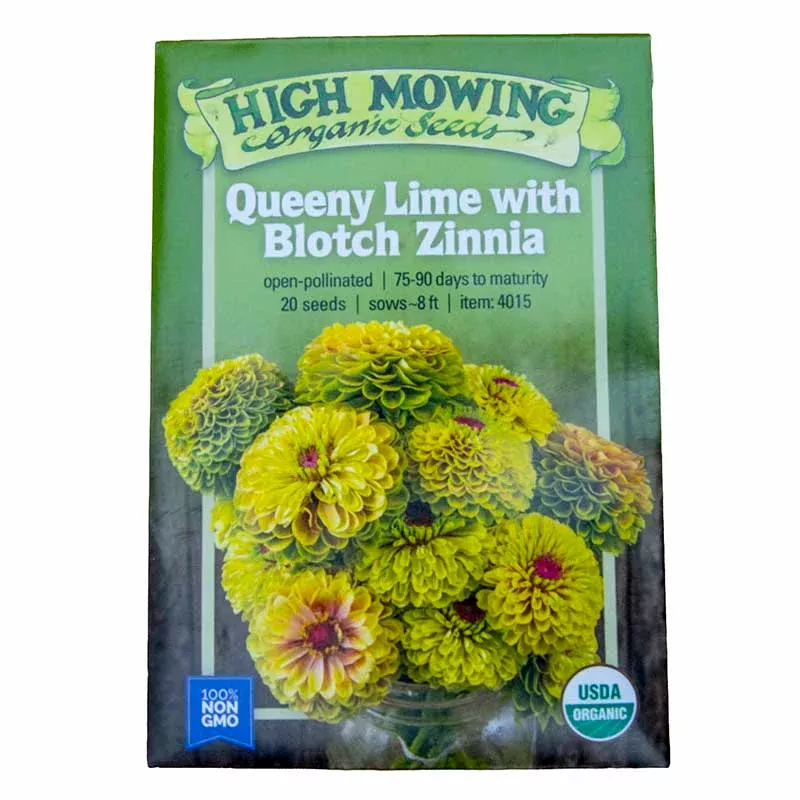
Queeny Lime with Blotch Zinnia ( Zinnia elegans ) is the kind of flower that stops you in your tracks. Soft lime-yellow petals surround a rich fuchsia eye, and some blooms wear a delicate pink blush that looks hand-painted. Plants are packed with 2–2.5″ single and double blooms on sturdy stems, creating a romantic, vintage feel in beds, borders, and cutting gardens all season long. These zinnias thrive in summer heat, draw in pollinators, and keep producing fresh blooms from midseason right up to frost, making them grown for market growers and home gardeners alike.
Variety Details
Botanical name:Zinnia elegans
Growth habit: Upright
Crop category: Flower seed
Flower character: Queeny Lime with Blotch Zinnia ( Zinnia elegans ) is the kind of flower that stops you in your tracks.
Product format: Seed packet
Sowing & Growing
Packet directions: Use packet-specific measurements when exact sowing figures are absent from the current record
Local timing: Adjust sowing to local soil temperature, frost dates, and seasonal conditions
Establishment: Keep the seed zone from drying during emergence without leaving it saturated
Prepare a weed-reduced seedbed for Queeny Lime with Blotch Zinnia and use the recorded planting season, depth, and light requirements. Press shallow-sown seed into good soil contact and keep the seed zone from drying during establishment. Thin or transplant only when the growth habit and spacing call for it. Leave enough room for mature width and air movement. Bloom timing and final height can shift with sowing date, climate, soil, moisture, and competition, so use listed figures as planning ranges.
Zinnias are native to Mexico and the Southwest, where they naturally evolved to love heat and sun, which is why they perform so well in summer gardens.
Place Queeny Lime with Blotch Zinnia where its recorded height and growth habit fit the surrounding planting. Shorter companions can be positioned toward bed edges, while taller stems need room where they will not shade small seedlings too early. If cutting flowers, harvest with clean tools at the stage appropriate to the bloom form. If leaving flowers in place, observe how bloom sequence changes through the season and record which sowing date performed best at the site.